
Moving to San Diego, California: What You Should Know Before You Move

What should you know before moving to San Diego, California?
Moving to San Diego means choosing between very different lifestyles, housing costs, climates, commutes, and property types. Before buying, compare the coast, inland communities, and North County San Diego based on your budget, commute, and the way you actually want to live.
San Diego looks straightforward on a map. You have the Pacific Ocean to the west, inland communities to the east, and dozens of cities and neighborhoods spread across the county.
But when you actually start looking at homes, you quickly realize that living in San Diego County can mean very different things depending on where you land.
A condo close to the coast in Encinitas is a completely different real estate decision from a suburban home in San Marcos. Living in Oceanside creates different commute and lifestyle considerations than living in Escondido. And a property with several acres in Fallbrook or Bonsall comes with an entirely different set of questions than a home in a planned community.
That is why your San Diego relocation should start with more than a list of popular places to live.
You need to understand the tradeoffs.
What Is It Really Like Living in San Diego?
When people picture living in San Diego, California, they often picture beaches and year-round outdoor recreation.
Those are certainly part of the lifestyle, but San Diego County is much more geographically diverse than that picture suggests.
Living near the coast can give you easier beach access, stronger marine influence, and, depending on the community, more opportunities to walk to restaurants, shops, and entertainment.
Move farther inland and the experience changes.
You may find larger homes and lots, more traditional suburban neighborhoods, hotter summer temperatures, and different commuting patterns.
Go farther into communities such as Fallbrook, Bonsall, or Valley Center, and you can encounter semi-rural properties, acreage, agricultural land, private roads, wells, septic systems, and significantly more privacy.
So when someone asks, “Is San Diego a good place to live?”, the more useful question is:
Which version of San Diego County fits the way you want to live?
That distinction should guide your home search from the beginning.
How Expensive Is It to Live in San Diego?
Housing is one of the biggest considerations when moving to San Diego County.
The Grok research compiled for this guide found multiple 2026 market sources placing recent San Diego County median sale prices roughly in the $920,000 to $965,000 range, depending on the reporting period, property types included, and methodology.
For example, the research identified Redfin data showing a median sale price of approximately $961,781 for San Diego County for the three-month period ending in August 2026, while other sources reported different figures for individual months or property types.
That variation matters.
A countywide median does not tell you what a detached home near the coast costs compared with a condo, an inland suburban property, or a home on acreage.
Mortgage rates also affect affordability. According to the Freddie Mac Primary Mortgage Market Survey data included in the research, the average 30-year fixed mortgage rate was 7.03% as of September 24, 2026.
That means your purchase price is only one part of your budget.
Before buying a home in San Diego, consider the complete monthly and long-term cost, including:
-
Mortgage payment and financing
-
Property taxes
-
Homeowners insurance
-
HOA dues when applicable
-
Mello-Roos or other assessments where applicable
-
Utilities
-
Maintenance
-
Commuting costs
-
Property-specific expenses
This becomes especially important when you're comparing very different property types.
A lower-priced property farther inland may give you additional space, but your commute could increase. An acreage property may provide privacy but require more maintenance. A condo closer to the coast could reduce exterior maintenance while introducing HOA dues.
The useful comparison isn't simply home price versus home price.
It's the overall cost and lifestyle attached to each option.
Coastal vs. Inland San Diego: What's the Difference?
This is one of the biggest decisions you may make during a San Diego relocation.
Living Near the Coast
Communities such as Del Mar, Encinitas, Carlsbad, and Oceanside provide varying degrees of access to the Pacific coastline.
Coastal real estate generally comes with a premium, although prices vary considerably by city, neighborhood, property type, condition, and exact proximity to the ocean.
You may also encounter:
-
Smaller lots in some areas
-
Greater housing density
-
Condos and townhomes
-
Established neighborhoods
-
Easier beach access
-
Cooler summer temperatures
-
Greater marine influence
Living Inland
As you move inland toward communities such as Vista, San Marcos, Escondido, Fallbrook, Bonsall, and Valley Center, the housing landscape changes.
Depending on the area, you may find:
-
Larger lots
-
More detached single-family homes
-
Greater privacy
-
Gated or golf communities
-
Acreage
-
Custom homes
-
Semi-rural properties
-
Different price points than coastal communities
Climate changes, too.
The research for this article found that inland San Diego County can experience substantially warmer summer temperatures than the coast because the Pacific Ocean's marine influence decreases as you travel inland.
Neither option is inherently better.
If walking to the beach is important to you, accepting a smaller property may make sense.
If you want room for a workshop, RV, horses, garden, or simply more distance between you and your neighbors, an inland property may deserve more attention.
Start with the lifestyle—not the ZIP code.
What Is North County San Diego Like?
If you're moving to San Diego, don't overlook North County.
One of the most important things to understand is that North County San Diego isn't one lifestyle or one type of real estate market.
It stretches from coastal communities to inland suburbs and semi-rural areas.
Oceanside
Oceanside sits along the coast immediately south of Camp Pendleton and offers a mix of coastal and inland neighborhoods. Its location makes it particularly relevant for some military households, while I-5 and Highway 76 are important transportation routes.
Carlsbad and Encinitas
Carlsbad and Encinitas provide coastal and near-coastal lifestyles, with housing costs that can be considerably higher than parts of inland North County.
If beach proximity and coastal climate are priorities, these areas may be part of your search.
Vista and San Marcos
Vista and San Marcos move you farther inland and provide substantial suburban housing options.
Highway 78 is a major east-west corridor through this part of North County, so commute patterns deserve close attention when comparing neighborhoods.
Escondido
Escondido sits farther inland with access to I-15. You'll find a broad mix of homes and neighborhoods, along with a noticeably more inland climate.
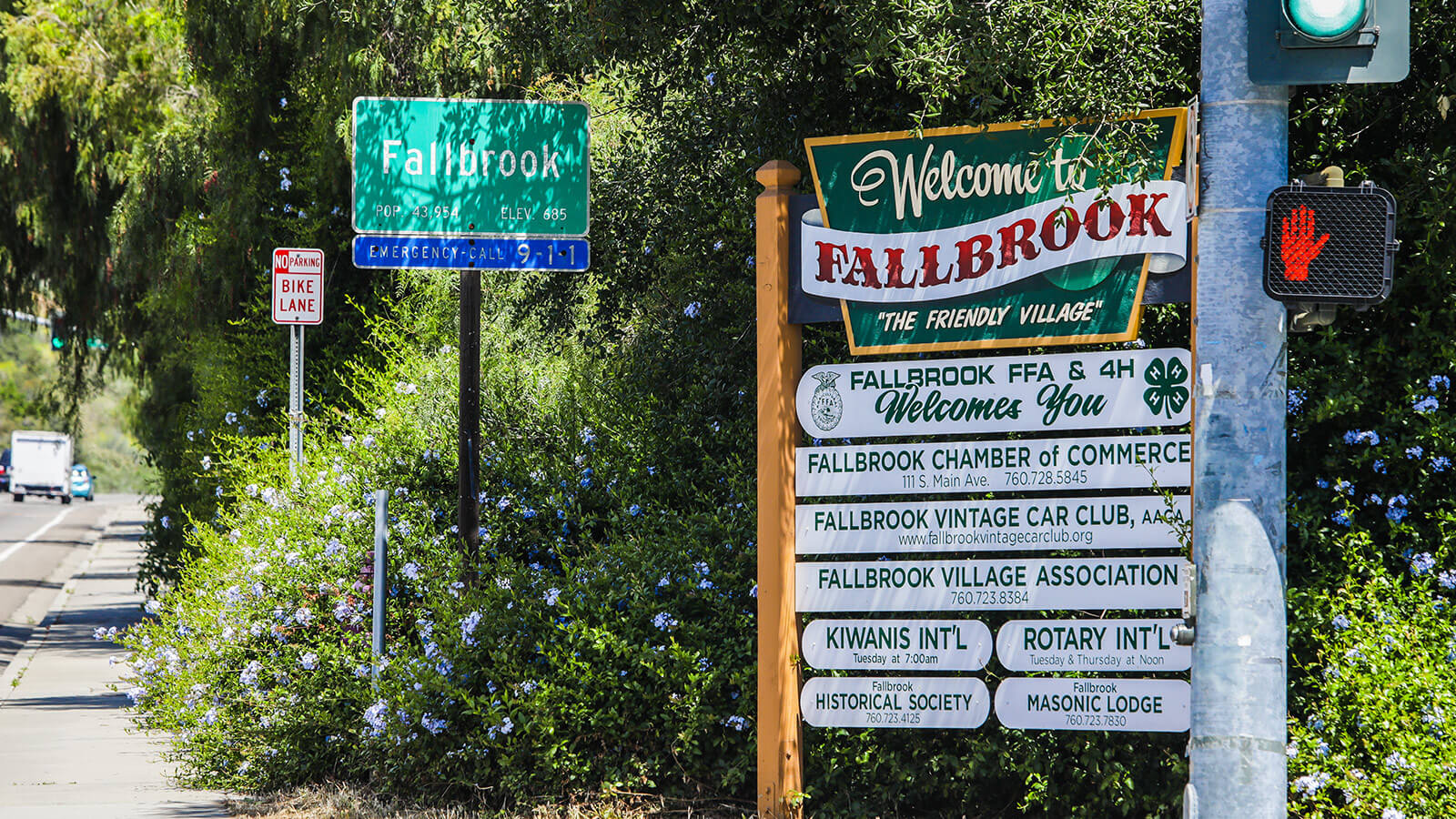
Fallbrook and Bonsall
Fallbrook and Bonsall are particularly relevant if your definition of San Diego County real estate includes larger lots, privacy, acreage, custom homes, or a more semi-rural environment.
These areas also have practical connections to Camp Pendleton and Highway 76.
The important takeaway is that moving to North County San Diego doesn't necessarily mean choosing between nearly identical suburbs.
You can move a relatively short distance and change your climate, lot size, commute, housing density, and overall lifestyle considerably.
Where Can You Find More Space or Land in San Diego County?
If you're relocating because you want more land, you may need to look beyond the communities people typically associate with San Diego.
Fallbrook, Bonsall, Valley Center, and other inland areas can offer opportunities for larger lots and acreage.
But buying more land changes your due diligence.
Depending on the individual property, you may need to investigate:
-
Septic systems
-
Wells
-
Propane
-
Private roads
-
Road-maintenance agreements
-
Easements
-
Property boundaries
-
Zoning
-
Agricultural uses
-
Fire-hazard designations
-
Defensible-space requirements
-
Homeowners insurance availability
-
Vegetation management
-
Ongoing land and property maintenance
This shouldn't automatically discourage you from buying acreage.
It simply means you should evaluate a rural or semi-rural property differently than you would a conventional suburban home.
For example, San Diego County regulates septic and well systems, while CAL FIRE and local agencies maintain fire-hazard and defensible-space requirements that can be particularly relevant in inland areas.
Before making an offer, identify which of these considerations actually apply to the individual parcel rather than assuming they do—or don't.
Moving Near Camp Pendleton? Your Duty Location Matters
For military families, moving to San Diego County can involve another major variable: where you need to get on and off Camp Pendleton.
The base covers a large geographic area, so living “near Camp Pendleton” doesn't automatically mean you'll have a short commute to your specific duty location.
Oceanside, Fallbrook, Bonsall, Vista, and other North County communities can all enter the conversation depending on your needs.
Consider:
-
Which gate you'll use most often
-
Your actual duty location
-
Traffic at your normal reporting and departure times
-
Access to I-5, Highway 76, or other relevant routes
-
Whether you prefer coastal, suburban, or semi-rural living
-
Your housing allowance and broader budget
-
Property type
-
School and family needs
-
How long you expect to remain in the area
Eligible buyers may also consider VA financing.
According to the U.S. Department of Veterans Affairs information reflected in the research for this article, qualified borrowers with full VA loan entitlement generally do not have a VA-imposed loan limit, although lender qualification, appraisal requirements, occupancy rules, and other loan requirements still apply.
This is also an area where local experience can matter.
Tim Kirk served 25 years in the U.S. Marine Corps and retired as a Master Gunnery Sergeant, so military relocation and the practical geography around Camp Pendleton are not abstract concepts to him.
The goal isn't to tell every military family to live in the same community. It's to understand your duty location and lifestyle first, then narrow your housing search accordingly.
Your San Diego Commute Can Change the Home-Buying Equation
One of the easiest relocation mistakes is looking at mileage instead of drive time.
San Diego County is large, and several major transportation corridors shape how residents move around it:
I-5 serves the coastal north-south corridor.
I-15 is a primary inland north-south route.
Highway 78 connects areas including Oceanside, Vista, San Marcos, and Escondido.
Highway 76 is particularly relevant to northern Oceanside, Bonsall, Fallbrook, and portions of the Camp Pendleton area.
I-8 is another major east-west corridor farther south.
Traffic conditions can vary substantially by route, direction, day, and time.
Instead of asking, “How many miles is this home from work?” ask:
“What is this drive actually like when I need to make it?”
Test the commute at your expected travel times before deciding that a particular location works.
A home you love can feel very different six months later if you're spending significantly more time in traffic than expected.
What Kinds of Homes Can You Find in San Diego County?
Another reason you shouldn't begin with a generic search for homes for sale in San Diego County is the sheer variety of properties available.
Depending on location and budget, your search might include:
-
Condos and townhomes
-
Traditional suburban homes
-
Coastal properties
-
Gated communities
-
Golf course homes
-
Luxury properties
-
Custom homes
-
Larger lots
-
Acreage
-
Equestrian properties
-
Rural and semi-rural homes
Instead of starting by asking where everyone else says you should live, define what you want from the property itself.
For example:
Do you want to walk to restaurants?
Do you need a manageable commute to Camp Pendleton?
Would you trade coastal proximity for a larger backyard?
Do you want enough land for horses?
Do you prefer a newer planned community?
Would you rather have privacy than walkability?
Do you want an HOA—or specifically want to avoid one?
Those answers can eliminate large portions of the county and make your search considerably more focused.
What Should You Know Before Buying a Home in San Diego?
Before you start scheduling showings, build your criteria around the complete decision.
1. Establish your real budget
Look beyond purchase price. Factor in your mortgage rate, taxes, insurance, HOA dues, assessments, utilities, and maintenance.
2. Decide how much commute you're willing to accept
Test actual routes rather than relying solely on map mileage.
3. Choose your preferred lifestyle
Beach access, walkability, suburban convenience, privacy, and acreage lead to very different parts of the county.
4. Think about climate
A coastal home and an inland home can experience noticeably different summer weather.
5. Identify your preferred property type
A condo near the coast, suburban house in San Marcos, and acreage property in Fallbrook shouldn't be evaluated using identical criteria.
6. Investigate insurance early
Don't wait until the final stages of escrow to determine whether insurance costs or availability affect your budget, particularly when considering properties in higher fire-hazard areas.
7. Understand the property itself
HOAs, Mello-Roos, septic systems, wells, easements, zoning, private roads, and other issues may or may not apply depending on the home.
Find out before you buy.
8. Pay attention to current market conditions
Inventory, mortgage rates, pricing, and buyer competition change. Base your offer strategy on the current submarket and property—not a headline about San Diego County as a whole.
9. Consider where your life may be headed
Your housing needs three or five years from now may be different from what you need today.
10. Work with someone who understands the areas you're comparing
Local knowledge becomes particularly useful when your search crosses multiple communities or very different property types.
A coastal condo and a five-acre Fallbrook property can technically exist in the same county while requiring very different expertise.
FAQ: Moving to San Diego, California
Is San Diego a good place to live?
San Diego County offers coastal, urban, suburban, inland, and semi-rural lifestyles, so whether it fits you depends heavily on your budget, commute, preferred climate, and housing needs. Rather than treating San Diego as one lifestyle, compare specific areas based on how you plan to live.
Where can I get more house or land in San Diego County?
Buyers looking for larger lots or acreage often expand their searches inland, including areas such as Fallbrook, Bonsall, Valley Center, and portions of other North County communities. Availability and pricing vary, and larger properties may require additional due diligence involving septic, wells, roads, easements, fire risk, insurance, or zoning.
Should I live near the coast or inland in San Diego?
That depends on your priorities. Coastal communities generally provide easier beach access and milder summer temperatures but often command higher real estate prices. Inland communities can provide more space and different property options but typically experience hotter summers and create different commute considerations.
Moving to San Diego Starts With Choosing the Right Part of San Diego
The biggest mistake you can make when moving to San Diego, California is assuming that choosing the county is the same thing as choosing where you should live.
It isn't.
Your experience can change dramatically depending on whether you choose the coast, an inland suburb, North County, or a semi-rural property.
Start with the questions that matter to your daily life:
How much do you want to spend? Where do you need to commute? How much space do you want? What kind of property do you want to maintain? How important is the coast? And what do you want your normal Tuesday to look like—not just your weekends?
Once you know those answers, choosing where to live in San Diego County becomes much easier.
If you're considering a move anywhere in San Diego County, Tim Kirk and EPIC Realty Group can help you compare communities, understand different property types, and narrow your search based on your budget, commute, lifestyle, and long-term plans.
The goal isn't to push you toward one part of the county. It's to help you understand the differences well enough to make the right decision for your situation.
Tim Kirk | REALTOR® | Team Leader
DRE #01941662
EPIC Realty Group powered by LPT Realty
Categories
Recent Posts








REALTOR® | TEAM LEADER | DRE #01941662 License ID: 01941662
+1(760) 704-9252 | timkirkrealestate@gmail.com