
What Do San Diego County’s Latest ADU Rules Mean for Fallbrook Homeowners and Buyers in 2026?
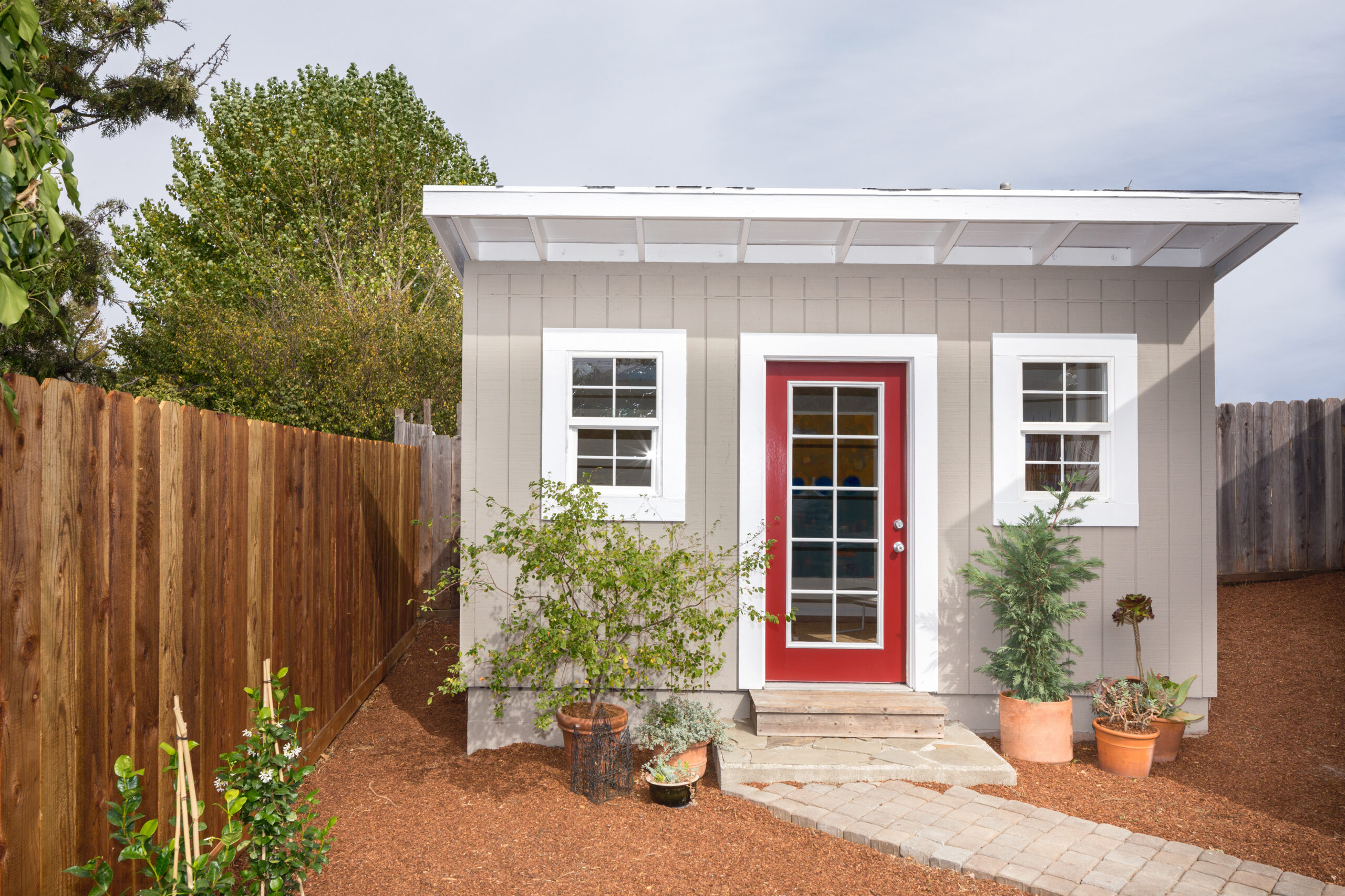
What do San Diego County’s latest ADU rules mean for Fallbrook homeowners and buyers in 2026?
San Diego County’s 2026 ADU changes create new possibilities for Fallbrook real estate, including a pathway for certain ADUs to be sold separately. But zoning, utilities, financing, fire safety, and parcel-specific requirements still matter.
If you own a home in Fallbrook—or you’re considering buying one with enough space for an accessory dwelling unit—2026 brought an important change worth understanding.
On April 4, 2026, San Diego County's implementation of AB 1033 took effect in unincorporated communities. The change creates a process under which qualifying homeowners may be able to convert a primary residence and ADU into condominiums and eventually sell them separately.
That possibility is particularly interesting in Fallbrook real estate, where larger lots, rural properties, multigenerational households, horse properties, and homes with land are more common than in many coastal parts of North County San Diego.
But there's an important distinction: having room for an ADU does not automatically mean you can build one, and having an ADU does not automatically mean you can sell it separately.
Here’s what Fallbrook homeowners and buyers should know.
What Changed With San Diego County ADU Rules in 2026?
On March 4, 2026, the San Diego County Board of Supervisors unanimously adopted an amendment to the County's ADU ordinance implementing Assembly Bill 1033 in unincorporated communities. The County says the new rules took effect April 4, 2026.
The biggest headline is the creation of a pathway allowing certain ADUs and primary residences to be separately conveyed through a condominium conversion process.
That matters in Fallbrook because much of the community is unincorporated San Diego County, meaning County—not city—land-use regulations often govern these properties.
The County has also developed an ADU Condo Guidance & Checklist to help property owners determine whether a project qualifies.
For the current County rules and updates, see the San Diego County ADU Zoning Ordinance Amendment page.
Can You Really Sell an ADU Separately From Your Fallbrook Home?
Potentially—but don't interpret the new law as blanket permission to build a guest house and immediately sell it as another house.
California law authorizes local governments to establish ordinances allowing a primary dwelling and ADU to be conveyed separately as condominiums. San Diego County has now implemented such a process for qualifying properties in its unincorporated jurisdiction.
The process comes with significant requirements.
Depending on the property and project, these can involve:
- Creating the units as condominiums under applicable California law
- Compliance with applicable subdivision requirements
- A safety inspection
- Approval from lienholders
- Recording the condominium plan
- Notifying utility providers
- HOA approval when an existing association is involved
One of the biggest issues homeowners shouldn't overlook is lender consent.
California law specifically provides that a subdivision map or condominium plan cannot be recorded under this process without the required consent from lienholders. A lender may also refuse consent or impose conditions before agreeing.
So if you're considering an ADU primarily because you hope to sell it separately someday, investigate that possibility before making your financial assumptions.
Why ADUs Are Especially Relevant in Fallbrook
ADUs aren't unique to Fallbrook, but the characteristics of the community can make them especially worth investigating.
Unlike many denser coastal neighborhoods, Fallbrook includes properties with larger lots, unusual configurations, detached garages and workshops, equestrian improvements, agricultural uses, and significant separation between structures.
That can create interesting possibilities for homeowners who need additional living space.
Multigenerational living
An ADU can provide parents, adult children, or extended family with a separate living area while keeping everyone on the same property.
For someone buying a home in Fallbrook specifically because they want more space, this can become an important part of the property search.
Long-term rental possibilities
An ADU may provide an additional long-term housing unit and potential rental income, subject to applicable laws and property-specific restrictions.
That doesn't mean you should automatically assume a particular rental amount when deciding what a property is worth. Buyers should research realistic rents, expenses, permitting status, utilities, insurance, financing, and tax implications.
Flexibility as your needs change
Today's home office might eventually become housing for a family member. A future ADU might provide space for an aging parent. A buyer might simply value having a second permitted residence on the property.
That flexibility can be particularly attractive to buyers looking for homes with land or acreage properties in Fallbrook.
Does a Large Fallbrook Lot Automatically Qualify for an ADU?
No.
This is one of the most important points for anyone searching for Fallbrook homes for sale with ADU potential.
A large parcel can make a property look ideal on paper, but acreage alone doesn't determine feasibility.
You may need to investigate issues such as:
| Property issue | Why it can matter |
|---|---|
| Zoning | Determines applicable development standards and uses |
| Septic/sewer | Additional bedrooms or dwelling units can affect wastewater requirements |
| Water | Service and capacity may influence project feasibility |
| Fire access | Rural properties may face access and fire-safety considerations |
| Setbacks | Existing structures and property lines affect placement |
| Easements | Utility, road, drainage, or other easements can limit usable areas |
| Topography | Slopes can substantially change construction feasibility and cost |
| Utilities | Extending electricity, water, sewer, or gas can add expense |
| HOA restrictions | Some properties may have additional association considerations |
| Existing permits | Unpermitted structures can complicate your plans |
That's why buyers should be careful with phrases such as "ADU potential" in real estate marketing.
Potential is not the same thing as approval.
If an ADU is a major reason you're buying a property, make feasibility part of your due diligence rather than assuming you'll be able to build exactly what you envision after closing.
What Do California's 2026 ADU Rules Say?
California's Department of Housing and Community Development updated its ADU Handbook in March 2026, incorporating changes to state ADU law. HCD's materials are a useful starting point for understanding the statewide framework.
You can review the latest California HCD ADU Handbook.
One notable statewide change from prior years concerns owner occupancy. HCD's updated guidance explains that state law prohibits local agencies from imposing an owner-occupancy requirement on an ADU under the applicable state provisions.
However, state law is only part of your research.
A Fallbrook property can involve San Diego County zoning, building requirements, fire regulations, septic or sewer considerations, utility requirements, recorded easements, private restrictions, financing, and other parcel-specific issues.
That is why a generic article about "California ADU laws" isn't enough when you're evaluating a specific Fallbrook property.
Could an ADU Increase the Value of Your Fallbrook Home?
It can—but there isn't a universal dollar amount you can add to a home's value simply because it has an ADU.
Buyers may value a permitted ADU for different reasons:
- Rental income potential
- Multigenerational living
- Guest accommodations
- Privacy for adult children or relatives
- Flexible living or working space
- The possibility of a qualifying condominium conversion
But value depends heavily on execution.
A permitted, thoughtfully located ADU with appropriate access, parking and privacy may be viewed differently from an awkward conversion or an unpermitted structure whose status isn't clear.
The underlying property matters too.
An ADU on a highly usable Fallbrook parcel may interact with buyer demand differently than one that consumes the most desirable portion of an equestrian property, blocks important access, or eliminates outdoor features buyers expect at that price point.
For sellers, the better question isn't simply:
"How much does my ADU add?"
It's:
"How will buyers in this particular segment of the Fallbrook market value this property's main residence, land and ADU together?"
That requires looking at actual comparable sales rather than applying a generic ADU premium.
What Should Buyers Look for When a Fallbrook Property Already Has an ADU?
If you're buying a home advertised as having an ADU, guest house, granny flat, casita, second unit, or converted garage, verify exactly what you're buying.
Useful questions include:
- Was the unit permitted as an ADU?
- Do County records match the existing improvements?
- What is the approved square footage?
- Are bedrooms and bathrooms permitted?
- How are utilities configured?
- Is the property on septic or sewer?
- Is the ADU currently rented?
- What agreements or leases exist?
- Are there HOA or recorded restrictions?
- Has anyone actually verified eligibility for a separate-sale condominium conversion?
That final question is increasingly important after San Diego County's 2026 ordinance change.
An existing ADU should not automatically be marketed or valued as a separately sellable residence. Eligibility needs to be verified under the County process, and California law imposes additional requirements, including lender considerations.
What Should Fallbrook Sellers Do Before Marketing ADU Potential?
If you're considering selling a home in Fallbrook, good documentation can make a significant difference.
Gather permits, plans, septic records, leases, utility information, and any documentation relating to the ADU before listing whenever possible.
If your property doesn't have an ADU but appears to offer ADU potential, be precise about what has—and hasn't—been verified.
Buyers increasingly look at properties through the lens of flexibility: Can parents live here? Can we create rental income? Can we build another unit? Could this work for two generations?
Those are powerful selling points when they're supported by facts.
Overpromising development potential can create the opposite result.
Fallbrook vs. Other North County San Diego Communities
ADU research should always start with the jurisdiction governing the property.
Fallbrook, Bonsall, and parts of other unincorporated communities may fall under San Diego County rules. Incorporated cities such as Oceanside, Vista, Carlsbad, San Marcos and Escondido have their own local governments and permitting processes operating within California's statewide ADU framework.
That means an ADU strategy that works for one North County San Diego property isn't necessarily transferable to another.
It's another reason buyers looking at North County San Diego real estate should evaluate the specific parcel rather than relying on general assumptions.
FAQs About Fallbrook ADUs
Can I build an ADU on my Fallbrook property?
Possibly. Your property's jurisdiction, zoning, existing development, utilities, wastewater system, site conditions and applicable state and local standards all matter. Before budgeting around an ADU, verify the specific parcel with the appropriate agencies and qualified professionals.
Can I sell my Fallbrook ADU separately in 2026?
San Diego County implemented an AB 1033 ordinance effective April 4, 2026, establishing a pathway for qualifying properties in unincorporated communities to separately convey a primary residence and ADU through a condominium process. It is not automatic, and requirements include property eligibility and other legal, subdivision, safety and lender considerations.
Will an ADU make my Fallbrook home worth more?
It may increase buyer appeal and market value, but the impact varies. Permitting, condition, privacy, utility configuration, rental potential, location, land usability and comparable sales all matter. A local valuation should analyze the property and relevant recent sales rather than assign a generic ADU value.
Thinking About Buying or Selling a Fallbrook Property With ADU Potential?
The 2026 changes make ADUs an even more interesting part of the Fallbrook real estate conversation—but they also make careful due diligence more important.
If you're buying, you want to understand what you're actually allowed to do with the property before paying a premium for "potential."
If you're selling, you want to present existing improvements and future possibilities accurately while showing buyers why the property's flexibility matters.
Tim Kirk and EPIC Realty Group powered by LPT Realty can help you evaluate the real estate side of that decision, including how ADUs, acreage, unique improvements, and multigenerational features fit into current buyer demand and comparable sales in Fallbrook and North County San Diego.
For permitting, zoning, tax, legal, engineering, financing, or construction questions, consult the appropriate agency or qualified professional before making a decision.
Tim Kirk | EPIC Realty Group powered by LPT Realty
Fallbrook and North County San Diego Real Estate
Categories
Recent Posts








REALTOR® | TEAM LEADER | DRE #01941662 License ID: 01941662
+1(760) 704-9252 | timkirkrealestate@gmail.com